Service 05 / 11
Modular, testable and well-documented APIs and services on NestJS — the backbone that lets your web and mobile products scale safely.
Overview
What you get.
- Modular architecture
- Tested APIs
- Scalable
NestJS brings structure to Node.js: dependency injection, modules and decorators that keep large codebases tidy. We use it to build REST and GraphQL APIs, microservices and background workers.
Security, observability and data integrity are designed in from day one — validated inputs, migrations, structured logging and automated tests — not bolted on before launch.
A backend is where mistakes become expensive: duplicated payments, leaked data, lost orders. We design APIs around clear business rules, validate every input at the boundary and make failure modes explicit.
We also care about the humans using the API. Clear OpenAPI documentation, consistent error shapes and versioning policies mean your web, mobile and partner teams can build against it with confidence.
Why it matters
The problem we solve.
Front-ends are only as good as the API
Slow, inconsistent or insecure endpoints limit everything built on top of them.
Structure prevents Node.js sprawl
Without conventions, Express apps grow into hard-to-test tangles. NestJS modules keep boundaries clear.
Security failures are costly
Broken access control and weak validation are the most common causes of data breaches.
Scaling needs foresight
Caching, queues and sensible schema design are far cheaper to include early than to retrofit under load.
Scope of work
What’s included.
REST & GraphQL APIs
Versioned, documented endpoints with OpenAPI/Swagger specifications.
Database design
Normalised schemas, indexes and migrations on PostgreSQL via TypeORM or Prisma.
Authentication & RBAC
JWT/OAuth2, refresh tokens, role-based access and rate limiting.
Queues & background jobs
BullMQ and Redis for emails, imports, webhooks and scheduled tasks.
Third-party integrations
Stripe, payment gateways, email/SMS, CRMs and ERP webhooks.
Observability
Structured logs, metrics, tracing and error alerting.
Ideal clients
Who this is for.
SaaS startups
Teams needing a robust multi-tenant API and admin tooling.
Mobile app owners
Products requiring a dependable backend for iOS and Android clients.
Ecommerce and marketplaces
Platforms with orders, payments, inventory and webhooks.
Companies integrating systems
Businesses that need a clean layer between legacy systems, CRMs and new front-ends.
How the project runs
Our process.
Transparent milestones, weekly demos and one point of contact from kickoff to launch.
- 01
Domain modelling
Entities, relationships and business rules captured before any code.
- 02
API contract
OpenAPI spec agreed with front-end and mobile teams so everyone builds in parallel.
- 03
Implementation
Modules, services, guards, pipes and DTO validation with strict typing.
- 04
Testing
Unit and e2e tests (Jest, Supertest) with seeded databases in CI.
- 05
Security hardening
OWASP review, input sanitisation, secrets management and dependency scanning.
- 06
Deployment
Dockerised service, migrations on release, health checks and autoscaling.
Quality bar
Standards we hold.
Validated at the edge
Every payload is typed and validated with DTOs before it touches business logic.
Least privilege
Role-based access, scoped tokens and per-environment secrets.
Reproducible environments
Docker and infrastructure-as-code so staging mirrors production.
Tested critical paths
Unit and end-to-end tests for auth, payments and data integrity.
Tooling
Technology stack.
Runtime
Data
Infra
Quality
Glossary
Terms we use.
- Dependency injection
- A pattern where classes receive their dependencies instead of creating them, making code modular and testable.
- DTO
- Data transfer object — a typed, validated shape for request and response payloads.
- Guard / Interceptor
- NestJS building blocks for authorisation and cross-cutting logic around request handling.
- Migration
- A versioned script that changes the database schema safely.
- Idempotency
- Making repeated requests produce the same result — crucial for payments and webhooks.
- Rate limiting
- Throttling requests per client to prevent abuse.
- Microservices
- An architecture splitting an app into small independently deployable services.
- Webhook
- An HTTP callback one system sends to another when an event occurs.
FAQ
Common questions.
REST or GraphQL?
REST for most products — simple, cacheable and well understood. GraphQL when many clients need flexible queries.
Can you extend our existing API?
Yes. We review the code, add tests around critical paths, and then extend or refactor safely.
How do you handle scaling?
Stateless services behind a load balancer, caching with Redis, queues for heavy work, and read replicas when needed.
Which database do you recommend?
PostgreSQL for most relational data, Redis for caching and queues, MongoDB only when the data is genuinely document-shaped.
Can you build a multi-tenant system?
Yes — using row-level tenancy or separate schemas depending on isolation, compliance and cost requirements.
Do you provide API documentation?
Always. We ship an OpenAPI/Swagger spec generated from the code so docs never drift.
Working together
How we engage.
Fixed-scope project
A defined scope, timeline and price agreed after discovery. Best for launches and rebuilds with clear requirements.
Monthly retainer
A dedicated block of senior time each month for continuous delivery, iteration and support.
Audit & advisory
A short, focused engagement that reviews what you have and hands you a prioritised plan to act on.
What to expect
Kickoff
A 45–60 minute call to understand goals, audience, constraints and timeline.
Written proposal
Scope, milestones, deliverables and pricing within a few working days of the call.
Weekly rhythm
A short demo and written update every week so there are never surprises.
Your input
One decision-maker, timely feedback and access to brand assets, content and accounts.
Ready for nestjs backend development?
Book a callOur projects
Proof, not promises.
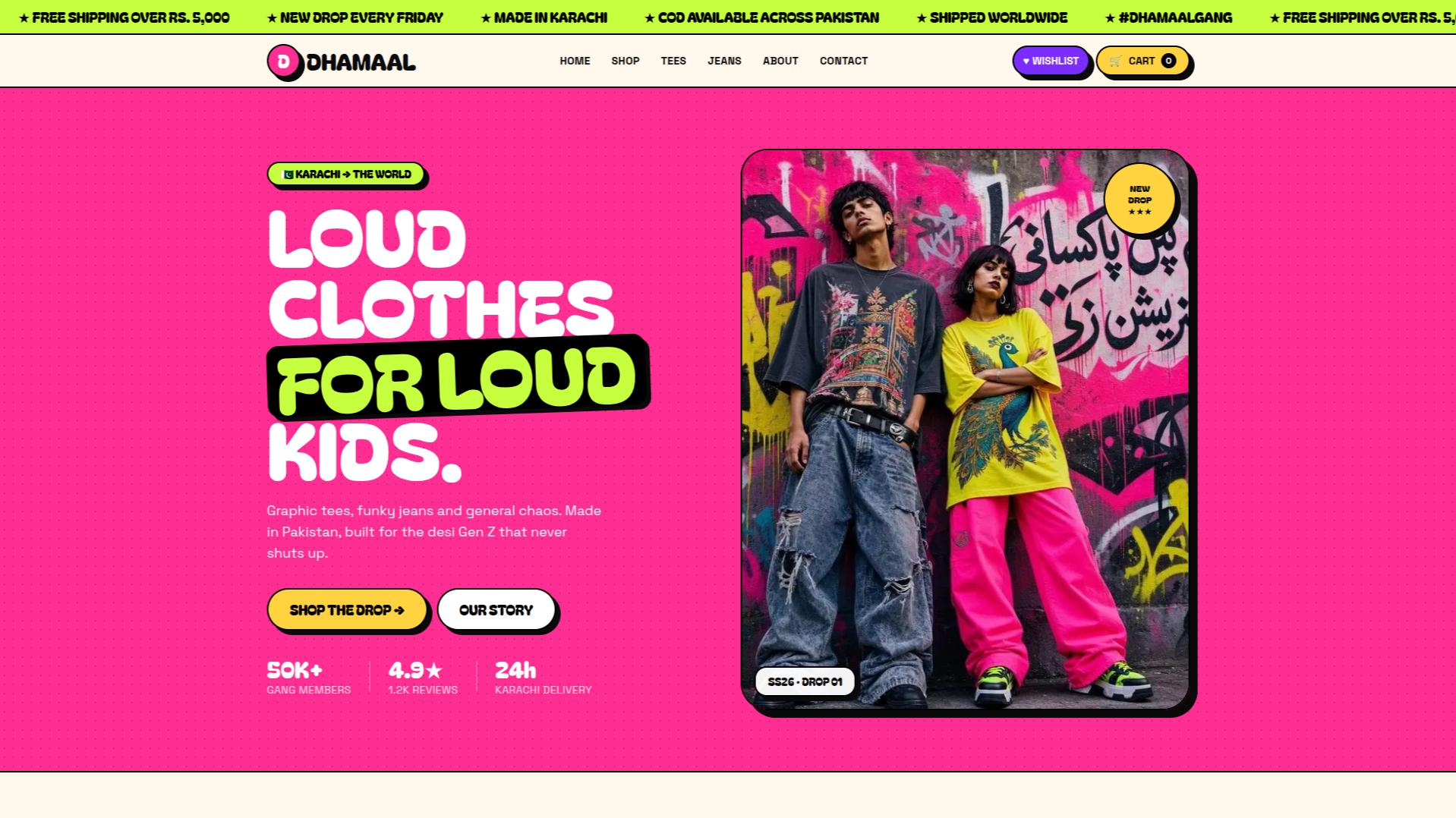
Dhamaal
Loud streetwear ecommerce — graphic tees & jeans from Karachi

Virra
Clothing brand ecommerce — Dresses, Trousers, and Accessories and more

Mehr
Pakistani fashion ecommerce — premium fabrics, ready-to-wear and custom tailoring