Service 09 / 11
Research-led UI/UX design that balances aesthetics with usability — delivered as production-ready design systems, not just pretty mockups.
Overview
What you get.
- User research
- Design systems
- Prototyping
We design from evidence: stakeholder interviews, analytics review and usability testing shape decisions long before visual polish. The result is an interface people understand without instructions.
Every deliverable is built for handoff — tokens, components, states and specs — so what's designed is exactly what gets built.
Good design is a business tool. Clearer navigation reduces support tickets, a calmer checkout increases conversion and a consistent system shortens development time. We tie design decisions to measurable outcomes wherever possible.
We work collaboratively and visibly: shared Figma files, regular walkthroughs and decision logs so stakeholders understand why something looks and behaves the way it does.
Why it matters
The problem we solve.
Usability drives revenue
Confusing flows lose customers silently; fixing them often outperforms new marketing spend.
Design debt slows teams
Inconsistent screens force designers and developers to relitigate decisions every sprint.
Accessibility widens your market
Inclusive design reaches more users and reduces risk.
Validation is cheaper than rebuilding
Testing prototypes catches problems before expensive development.
Scope of work
What’s included.
UX research
Interviews, heuristic evaluation, competitor teardown and analytics analysis.
Information architecture
Sitemaps, navigation models and user flows.
Wireframes & prototypes
Low- to high-fidelity interactive prototypes in Figma.
Visual & brand UI
Typography, colour, iconography and motion principles.
Design system
Tokens, components, variants and usage guidelines.
Usability testing
Moderated and unmoderated tests with prioritised findings.
Ideal clients
Who this is for.
Startups defining a product
Founders turning an idea into a testable, buildable experience.
Teams with a struggling UI
Products with low activation, high drop-off or support-heavy flows.
Growing companies
Brands needing a scalable design system across web and mobile.
Agencies and dev teams
Engineering groups needing dedicated design capacity.
How the project runs
Our process.
Transparent milestones, weekly demos and one point of contact from kickoff to launch.
- 01
Research
Goals, users and context understood through interviews and data.
- 02
Define
Personas, jobs-to-be-done and problem statements aligned with stakeholders.
- 03
Ideate
Sketches, flows and wireframes exploring several directions.
- 04
Design
High-fidelity UI using an auto-layout, token-driven Figma system.
- 05
Validate
Prototype tested; findings fed back before development begins.
- 06
Handoff
Annotated specs, assets and developer support during build.
Quality bar
Standards we hold.
Evidence over opinion
Decisions backed by research, analytics or testing.
Token-driven systems
Consistent colour, type and spacing across every screen.
Every state designed
Empty, loading, error and edge cases — not just the happy path.
WCAG-aware contrast and sizing
Accessible colour, tap targets and focus indicators from the first draft.
Tooling
Technology stack.
Design
Systems
Research
Motion
Glossary
Terms we use.
- Wireframe
- A low-fidelity layout focused on structure and content, not style.
- User flow
- The path a user takes to complete a task.
- Heuristic evaluation
- Expert review of an interface against usability principles.
- Design system
- A shared library of components, tokens and guidelines.
- Accessibility (a11y)
- Designing for people with diverse abilities; WCAG sets the standard.
- Affordance
- A visual cue that suggests how an element is used.
- Persona
- A research-based profile representing a key user group.
- Information scent
- How well labels and links signal where they lead.
FAQ
Common questions.
Can you design without building?
Yes — we deliver design files and specs for your own team, or hand off to ours.
Do you redesign existing products?
Yes. We start with an audit to find what actually hurts users, rather than redesigning everything.
Will the design be responsive?
Always: mobile, tablet and desktop layouts with documented breakpoints.
What do we receive at the end?
Figma files with components and tokens, a clickable prototype, annotated specs, exported assets and a short guideline document.
Do you do branding and logos?
We focus on product and web UI. We can extend an existing brand into a full digital identity and recommend brand specialists when needed.
How do you test designs?
Unmoderated task tests, moderated sessions, or quick guerrilla testing — chosen to fit your timeline and audience.
Working together
How we engage.
Fixed-scope project
A defined scope, timeline and price agreed after discovery. Best for launches and rebuilds with clear requirements.
Monthly retainer
A dedicated block of senior time each month for continuous delivery, iteration and support.
Audit & advisory
A short, focused engagement that reviews what you have and hands you a prioritised plan to act on.
What to expect
Kickoff
A 45–60 minute call to understand goals, audience, constraints and timeline.
Written proposal
Scope, milestones, deliverables and pricing within a few working days of the call.
Weekly rhythm
A short demo and written update every week so there are never surprises.
Your input
One decision-maker, timely feedback and access to brand assets, content and accounts.
Ready for ui / ux design?
Book a callOur projects
Proof, not promises.
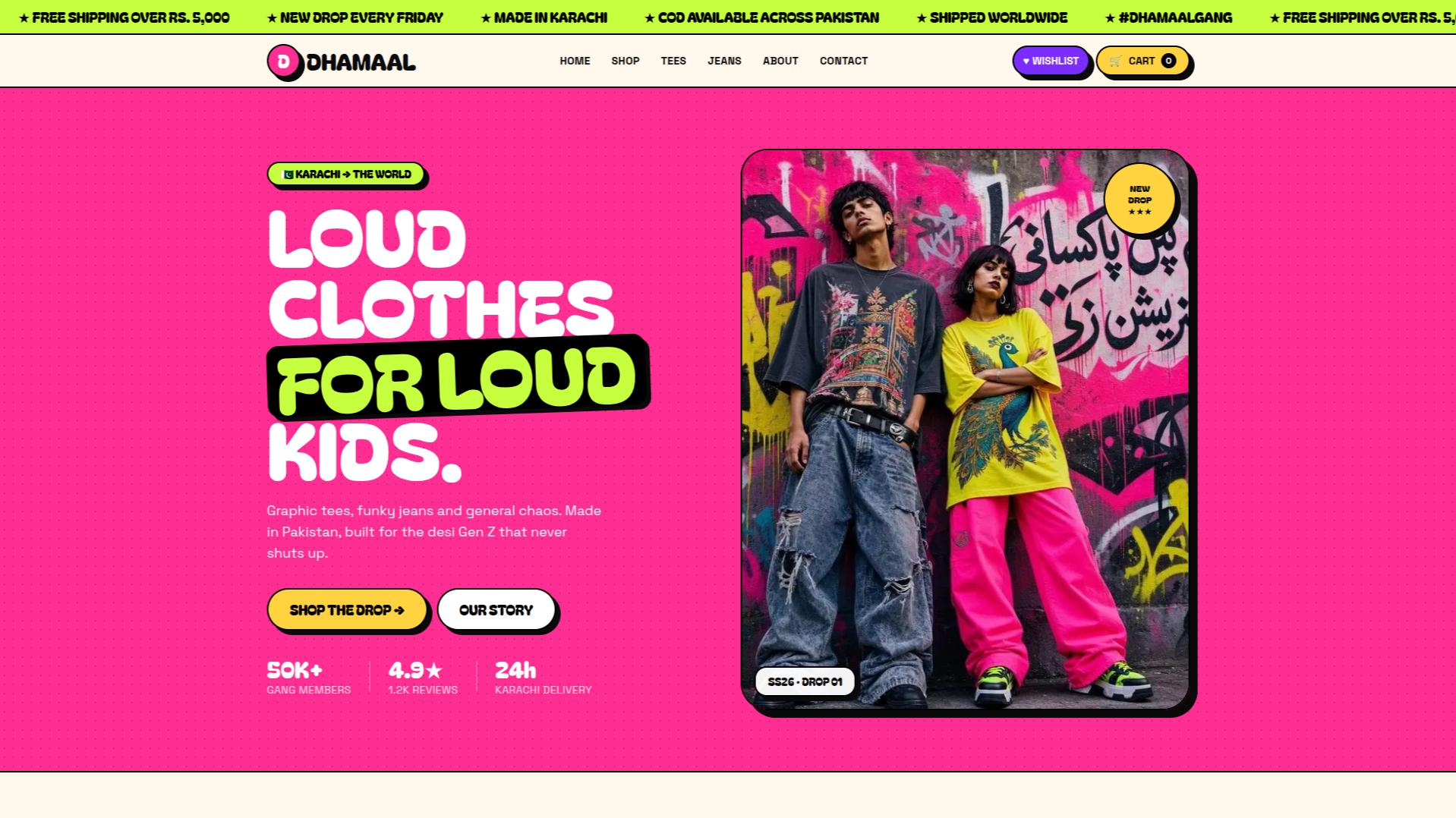
Dhamaal
Loud streetwear ecommerce — graphic tees & jeans from Karachi
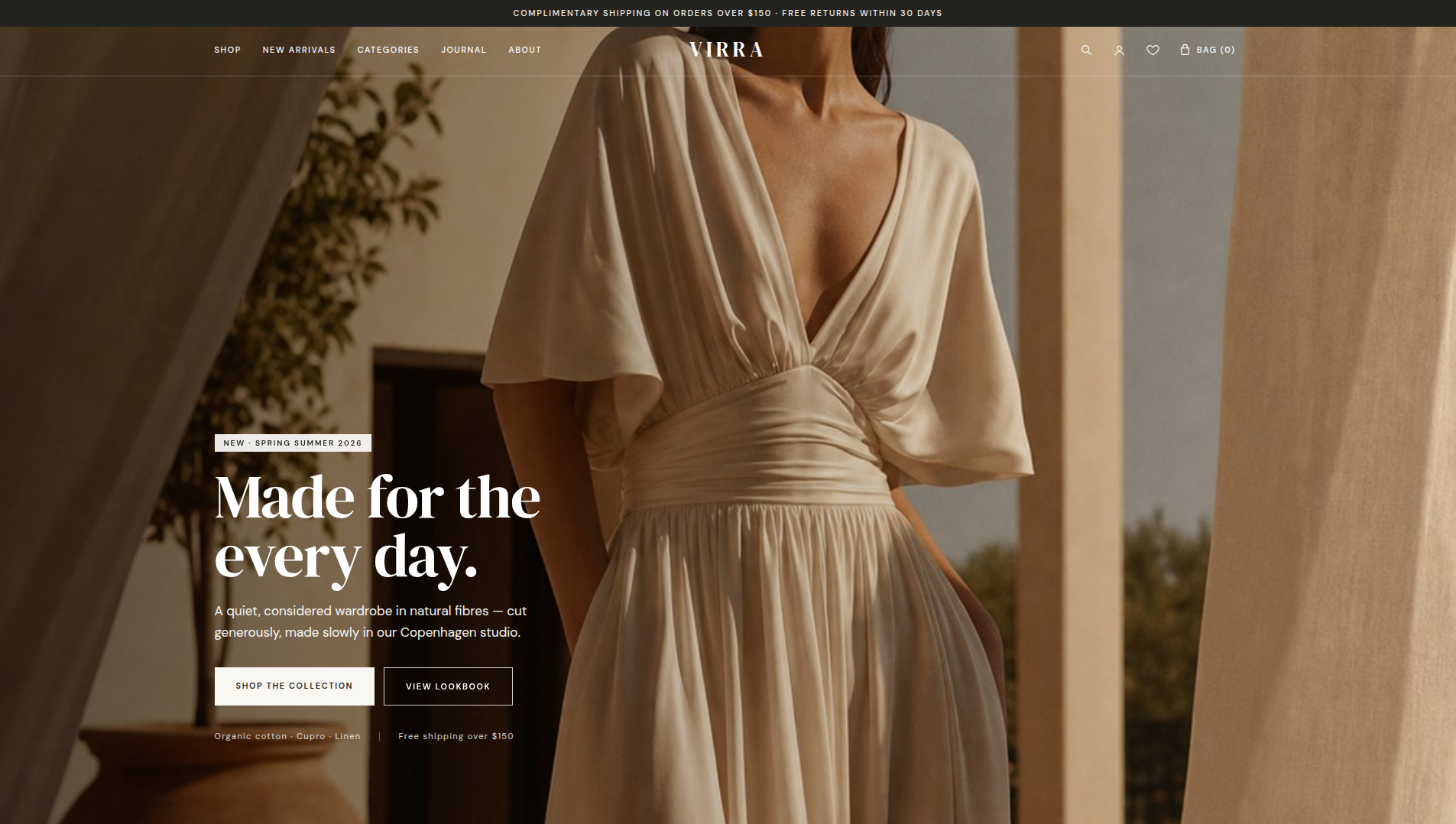
Virra
Clothing brand ecommerce — Dresses, Trousers, and Accessories and more
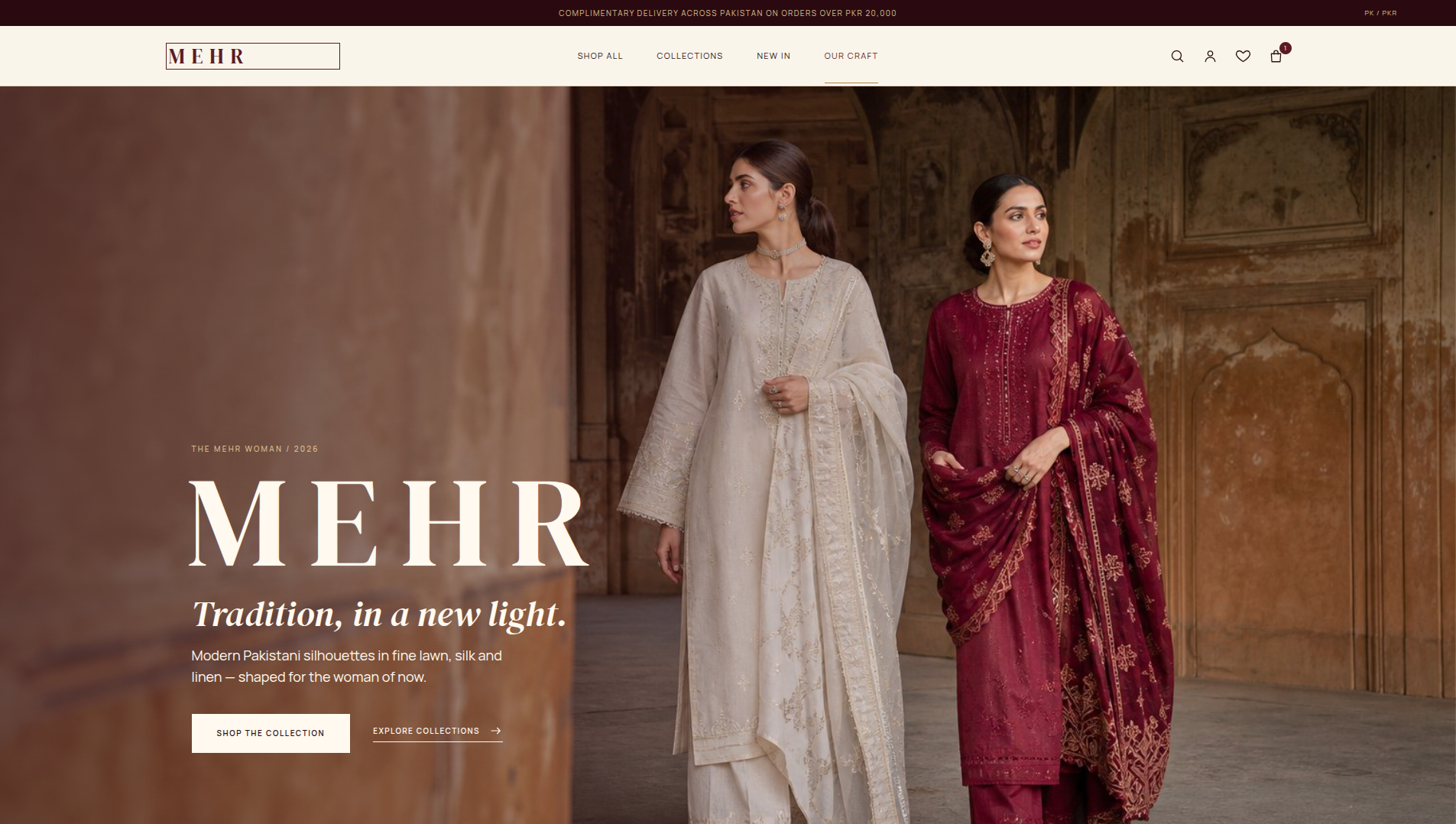
Mehr
Pakistani fashion ecommerce — premium fabrics, ready-to-wear and custom tailoring